You Don't Need a Perfect Apology to Come Home to God

You Don't Need a Perfect Apology to Come Home to God
There's a walk some of us have been putting off for years. Maybe it's an actual driveway and an actual phone call. Maybe it's the quiet return to God we keep meaning to make and keep talking ourselves out of.
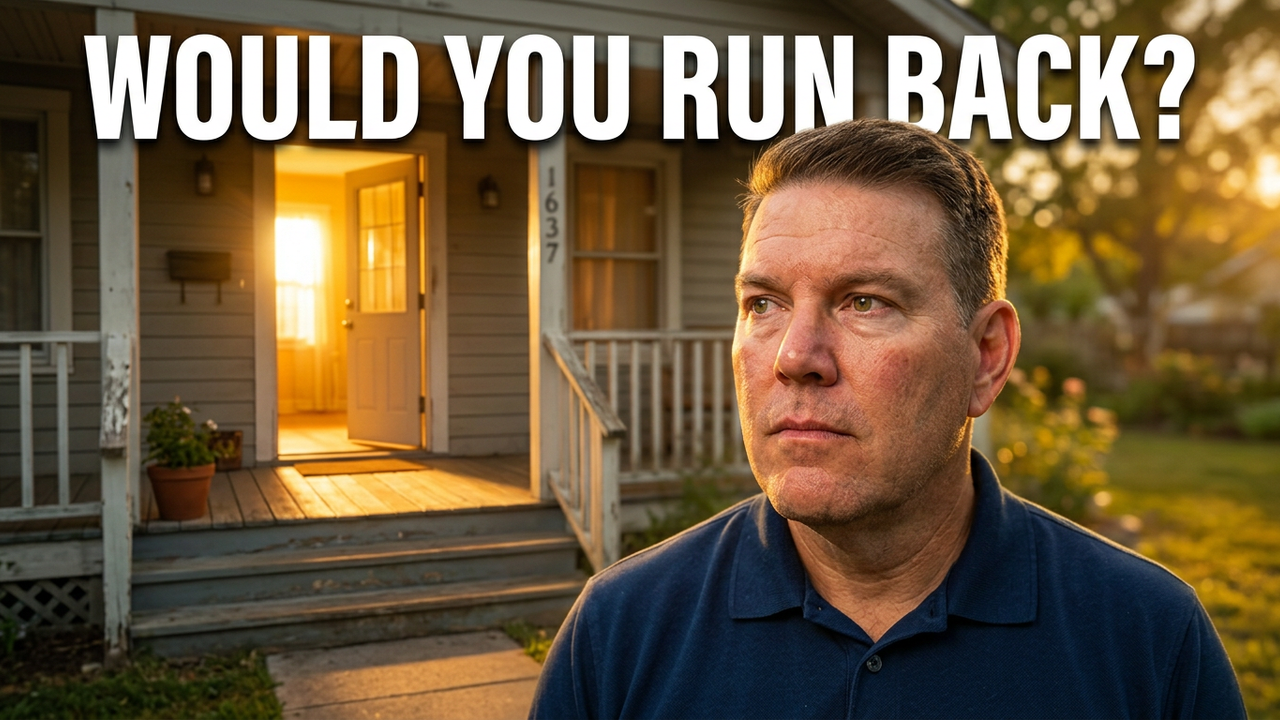
I've sat across from a lot of people over the years who walked in already bracing for a lecture before they'd even said a word. Thirty-plus years of this work will teach you that pattern fast. Someone comes in already downgraded in their own mind, already planning to ask for less than they actually need, because they've watched the whole reception play out in their head and it's cold.
Luke 15 tells the story of a father who ran, and it wrecks that entire assumption.
The speech nobody needed
In the parable, a son asks for his inheritance early, which in that culture was close to telling his father he wished him dead. He burns through the money, a famine hits, and he ends up feeding pigs and eyeing what they're eating. For a Jewish man, that's about as low as the floor goes.
Then Scripture says something remarkable. He "came to himself." That's one of the most hopeful lines in the whole Bible. The fog clears. He remembers who he is and whose he is, and he decides to go home.
But on the walk back, he writes a speech. "I've sinned, I'm no longer worthy, make me a hired servant." He's not walking home to a father at that point. He's walking home to negotiate a demotion, because he's already decided the best he can hope for is a spot on the payroll instead of a seat at the table.
I ask people this question often, and I'll ask you too. What speech have you been rehearsing? What have you already agreed to settle for in your own head, before anyone's had the chance to actually respond?
While he was still a long way off
Here's the turn in the story, and it's worth slowing down for. "While he was still a long way off, his father saw him." That single detail means the father had been watching. Every day. You don't spot a distant figure on the road unless you've been scanning it, hoping.
The son isn't chasing down a reluctant father. The father has been aching for him the whole time.
What running actually cost him
Then the father does something that would have stopped the whole village. He runs.
A man of his age and standing didn't run in that culture. It meant hiking up his robe and exposing his legs, which was considered beneath a patriarch, close to humiliating. He throws all of that away anyway and sprints down the road, arms open, toward a son who still smells like the pigpen.
The son gets his speech started. He never finishes it. The father interrupts him before he can ask for the demotion, because there isn't one on the table.
What the father calls for
Instead, the father calls for the best robe, a ring, and sandals. Every one of those items is doing the same work. The robe is the father's own robe of honor. The ring is the family signet, a mark of authority. The sandals matter because servants went barefoot and sons wore shoes.
Put together, they say one thing: you are not a servant here. You're my child. You always were.
Paul says the same thing plainly in Romans 5:8. While we were still sinners, Christ died for us. The cross is God doing exactly what the father did on that road, covering the distance before we've earned a single step of it ourselves.
Stop editing your apology, start walking
If you're the one standing at the edge of that walk right now, here's the first thing I'd tell you. The son's speech never got finished. You don't need the words exactly right, and you don't need your shame fully sorted out before you move. Come as you are, mid-mess. That's precisely when the father was already running.
Let him give you the robe
This part is harder than it sounds. A lot of us come home and then quietly stay dressed like the hired help anyway. We can accept that God tolerates us. We resist believing he actually delights in us. If he's put the robe on your shoulders, stop introducing yourself as a hired hand. Receiving it is its own act of faith, maybe a harder one than making the walk in the first place.
I've watched people carry shame like it's a second job, and I've carried plenty of it myself. Wasted seasons. Choices that sent my body a bill I didn't want to pay. Roads I had to walk back down more than once. Every single time I turned around, I never got the crossed arms I was bracing for. I got grace running the other direction, toward me, faster than I was walking toward it.
Go stand at the end of the driveway for someone else
Once you've actually felt that kind of welcome, something shifts. You start watching the road for other people instead of just your own. Who in your life is a long way off right now, rehearsing a speech, convinced they're only going to get judgment when they finally show up? Be the one who runs first. Be the arms that open before the apology's even finished. That's the family business now.
Today's win
If there's a walk you've been avoiding, toward God or toward a person, you don't need to finish writing the speech first. Just start walking. He'll cover the rest of the distance running.
If you've never made that walk toward God at all, that invitation is open right now. You can read more about what that decision looks like at truthunveiledwithralph.com/decision.
Keep seeking the truth, and let it set you free.

Ralph V. Estep, Jr. is a Delaware-based licensed accountant, author, rancher, and media host with more than 30 years of experience in finance, taxation, and small-business leadership. As the founder of Saggio Accounting+PLUS and the creator of the Ask Ralph Media network, Ralph helps entrepreneurs, creators, and everyday families replace money confusion with clarity, confidence, and practical next steps—without shame and without hype.
Ralph’s work blends deep professional expertise with a coach’s mindset and a communicator’s heart. He has held leadership roles across public accounting, financial institutions, law firms, and technology organizations, bringing a rare combination of traditional accounting rigor and modern systems thinking to the people he serves. A graduate of the University of Delaware and Wilmington University (MBA), Ralph is known for turning complex money topics into simple, repeatable frameworks that help people make wiser decisions and build lasting financial stability.
Through Ask Ralph Media, Ralph hosts multiple shows designed to meet people where they are and guide them forward. He is the host of Financially Confident Christian, a daily, faith-based show offering warm, pastoral encouragement for listeners who want peace and practical wisdom with their finances.
He also hosts Truth Unveiled with Ralph, a weekly program that contrasts cultural pressure with biblical truth and invites listeners into deeper spiritual and practical alignment. For small business owners, Ralph leads Grit and Growth Business, spotlighting real sto… Read More
The Resurrection of Jesus: What Happens When You Actually Trace the Evidence