The Cross as Our Only Boast: Finding True Worth Beyond Accomplishments
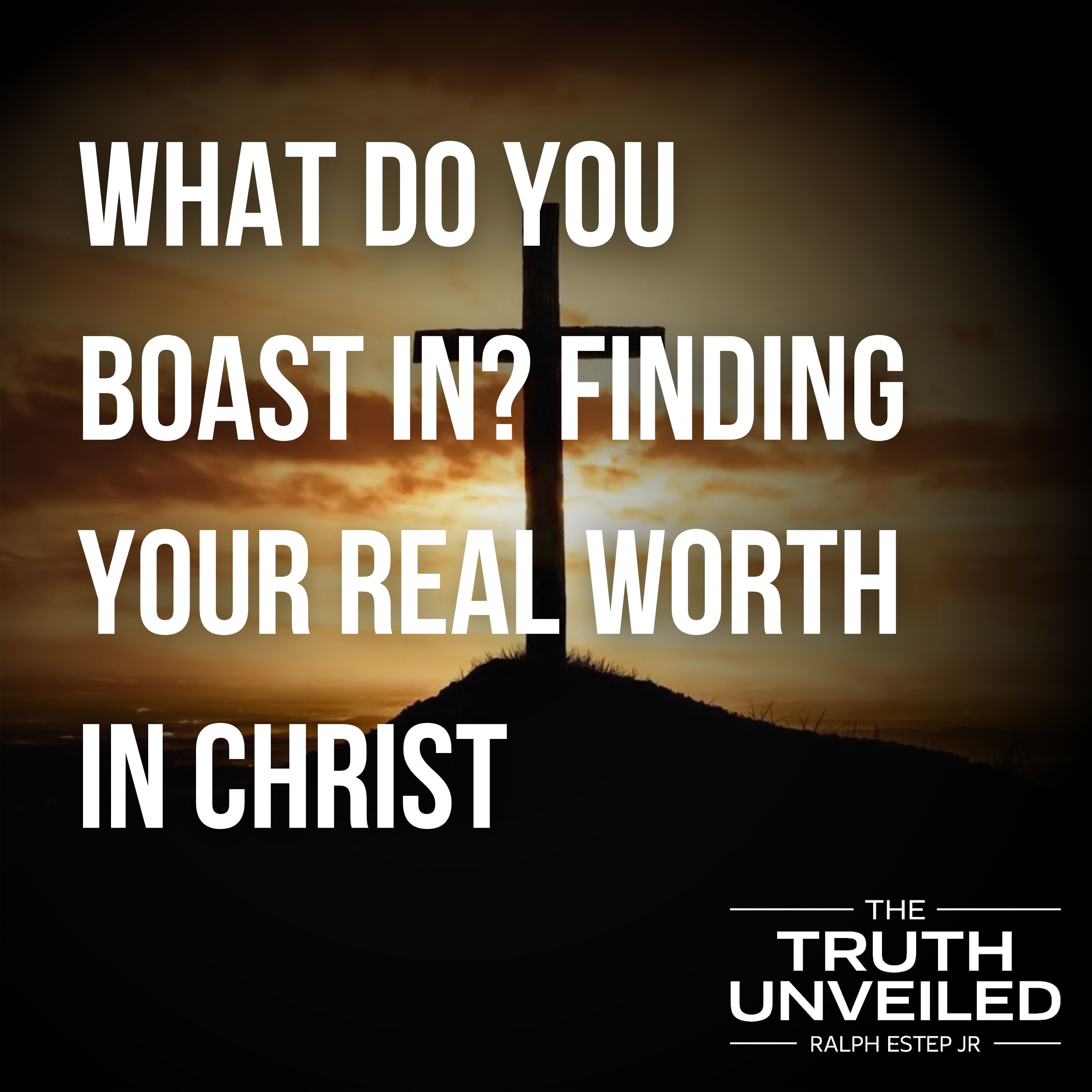
The Cross as Our Only Boast: Finding True Worth Beyond Accomplishments
In a world that tells us to define ourselves by what we achieve, Paul's ancient question still cuts through the noise: "What are you boasting in?"
Most of us tie our worth to something we can see and measure. A thriving business. A stellar job title. The right appearance. The right income. We've dressed up self-promotion as personal branding, credibility, and development. We boast constantly—just with a different language than Paul's world used.
The Apostle Paul got specific about this in Galatians 6:14. His answer? "May I never boast except in the cross of our Lord Jesus Christ." Not his credentials. Not his accomplishments. The cross.
That answer sounds simple until you try living it.

The Hidden Cost of Boasting in Yourself
I once knew a consultant who built an impressive practice from nothing. Clients trusted her. Colleagues envied her. On paper, she'd done everything right. Yet internally, she felt constantly inadequate. Every conversation became a chance to prove herself. Every setback threatened to unravel who she thought she was.
This is what happens when your value comes from what you've built.
Paul's generation boasted in circumcision, ancestry, and religious knowledge. They had markers of status and belonging. Today, our markers just look different. We boast in:
● Career achievements. The title, the salary, the trajectory.
● Knowledge and expertise. "I know this field inside and out."
● Possessions and appearance. The car, the house, the look.
● Survival stories. "I came from nothing and made it."
The problem isn't ambition. It's that these boasts all require constant maintenance. You have to keep proving you're as good as yesterday. Fear creeps in. What if you fail? What if someone finds out you're not what you claimed? What if you lose it all?
This anxiety is the tax on self-reliance.
Why the Cross Changes Everything
Paul wasn't telling people to stop caring about their work. He was saying: Stop anchoring your identity there.
When you boast in the cross, something shifts.
The cross represents the opposite of what the world values. It's weakness, not strength. Death, not achievement. Shame, not status. Jesus abandoned every credential—his status in heaven, his power, his honor—to take on human frailty and die a criminal's death.
Yet that's the moment everything changes.
When Jesus said "It is finished" from the cross, he was announcing something revolutionary: your worth is not earned. It's declared.
The cross says:
You don't have to earn your value. The payment has already been made. Your worth isn't a ladder you climb. It's a gift you receive. This is why Paul could say with such certainty: you are already valued, already accepted, already enough. Not because of what you've done, but because of what Christ did.
You don't have to prove yourself to be accepted. Our natural instinct is to prove we're worthy. We perform, we accomplish, we show our worth through works. The cross interrupts this completely. Christ's sacrifice proves your worth to God. You don't have to convince anyone. God already decided.
You don't have to maintain your identity through performance. The fear underneath boasting is the fear of losing it all. What happens if the business fails? If your career stalls? If your appearance changes? The cross removes this fear because your identity is secured in something unchanging: the completed work of Christ. It's done. You can rest.
What Changes When You Boast in the Cross
This isn't theoretical. When you actually shift your boasting from yourself to the cross, your life changes.
Career decisions become clearer. You can take risks you couldn't before. You can fail without feeling like you're failing as a person. A job loss doesn't unravel your identity. A business mistake doesn't define you. You can make decisions based on wisdom and calling rather than on the desperate need to prove yourself.
Relationships get honest. You stop projecting. You stop performing. Someone else doesn't have to help you feel valuable—that's already secure. This means you can be vulnerable with people. You can admit mistakes. You can ask for help. Genuine connection becomes possible in a way it wasn't before.
Hardships don't destroy you. Loss still hurts. Rejection still stings. Failure still happens. Yet something fundamental shifts. If your worth isn't tied to your circumstances, then your circumstances can't determine your worth. You can grieve what's gone without grieving who you are.
Generosity flows naturally. When you're no longer desperate to prove yourself through possessions or status, you can give freely. Your resources aren't trophies that prove your worth. They're tools to be used. Your knowledge isn't a credential to protect. It's something to share.
Rest becomes possible. The deepest rest isn't physical. It's the rest that comes from finally laying down the burden of proving yourself. You worked so hard to become someone. The cross says: stop. You are enough. You can rest.
Boasting in the Cross Today
Paul's world had temples and public ceremonies around status markers. Our world has Instagram, LinkedIn, and the endless highlight reel.
The mechanism is the same. We're still boasting. We've just updated the platform.
The invitation remains the same too: What if you stopped?
What if you stopped needing to broadcast your wins? Stopped feeling threatened by someone else's success? Stopped checking your phone to see who approved your latest post? Stopped measuring your worth against what others have achieved?
What if your identity was so secure in the cross that you didn't need these external markers anymore?
This isn't about becoming unmotivated or lazy. Plenty of people boast in the cross and still build businesses, raise families, and accomplish real things. The difference is the foundation. They're not building to prove anything. They're building from a place that's already secure.
The Practice of Boasting Differently
If you've been boasting in yourself for years, this shift doesn't happen overnight.
Here's where you start:
Identify what you're actually boasting about. Notice what you bring up in conversations. What do you work hardest to protect or improve? That's probably where your boasting lives. Career? Appearance? Knowledge? Intelligence? That's not judgment—it's clarity. You can't shift what you don't see.
Let that thing become smaller. Not zero. Just smaller. If you've been defining yourself entirely through your job, start noticing other parts of your life. If your appearance has been your primary measure, start building other competencies. The goal isn't to care about these things. It's not to let them be everything.
Spend time with the cross. This sounds churchy, but it works. Read the Gospel accounts of Jesus' crucifixion. Not as a religious exercise, but as the story of someone laying down every status marker and dying to prove a point. Sit with that. Let it challenge you. Journal about what that means for your boasting.
Find community. You can't do this alone. Find people who are learning to boast in the cross too. A church community, a small group, a trusted friend. Someone you can be honest with about your boasts and your fears. This weight is too heavy to carry alone.
Practice one small act of freedom. Share a mistake without spinning it positively. Admit something you don't know. Say no to a status-building opportunity because it doesn't align with your calling. These small acts train your soul into a new way of living.
The Freedom on the Other Side
What waits on the other side of boasting only in the cross?
A confidence that doesn't depend on circumstances. A generosity that flows naturally. Relationships that are real instead of performed. Work that's driven by calling, not desperation. Rest that's deep enough to actually heal you. The ability to fail and keep going.
And underneath it all, something Paul knew and wanted you to know: you're enough. You were enough the moment the cross was raised. Everything you accomplish after that is overflow, not necessity.
The cross doesn't ask you to stop achieving. It asks you to stop using achievement as your boast. It asks you to stop building your identity on sand and start building it on something solid.
What are you boasting in right now?
Spend some time with that question this week. Notice where your energy goes. Where your fear lives. Where you feel like you have to prove something. That's probably where your boasting is.
Then ask Paul's question differently: What if you boasted in the cross instead?
Join us at truthunveiledwithralph.com/join to explore this deeper in community.

Ralph V. Estep, Jr. is a Delaware-based licensed accountant, author, rancher, and media host with more than 30 years of experience in finance, taxation, and small-business leadership. As the founder of Saggio Accounting+PLUS and the creator of the Ask Ralph Media network, Ralph helps entrepreneurs, creators, and everyday families replace money confusion with clarity, confidence, and practical next steps—without shame and without hype.
Ralph’s work blends deep professional expertise with a coach’s mindset and a communicator’s heart. He has held leadership roles across public accounting, financial institutions, law firms, and technology organizations, bringing a rare combination of traditional accounting rigor and modern systems thinking to the people he serves. A graduate of the University of Delaware and Wilmington University (MBA), Ralph is known for turning complex money topics into simple, repeatable frameworks that help people make wiser decisions and build lasting financial stability.
Through Ask Ralph Media, Ralph hosts multiple shows designed to meet people where they are and guide them forward. He is the host of Financially Confident Christian, a daily, faith-based show offering warm, pastoral encouragement for listeners who want peace and practical wisdom with their finances.
He also hosts Truth Unveiled with Ralph, a weekly program that contrasts cultural pressure with biblical truth and invites listeners into deeper spiritual and practical alignment. For small business owners, Ralph leads Grit and Growth Business, spotlighting real sto… Read More
The Psalm God Never Fixed (And What It Means for Your Prayers)