Your Worst Failure Doesn't Get the Final Say
Your Worst Failure Doesn't Get the Final Say
The morning after you fail someone you love has a particular flavor. You wake up, and for a few merciful seconds you've forgotten. Then it lands. The thing you said. The thing you didn't do. The moment you had one chance to stand up, and you sat down instead.
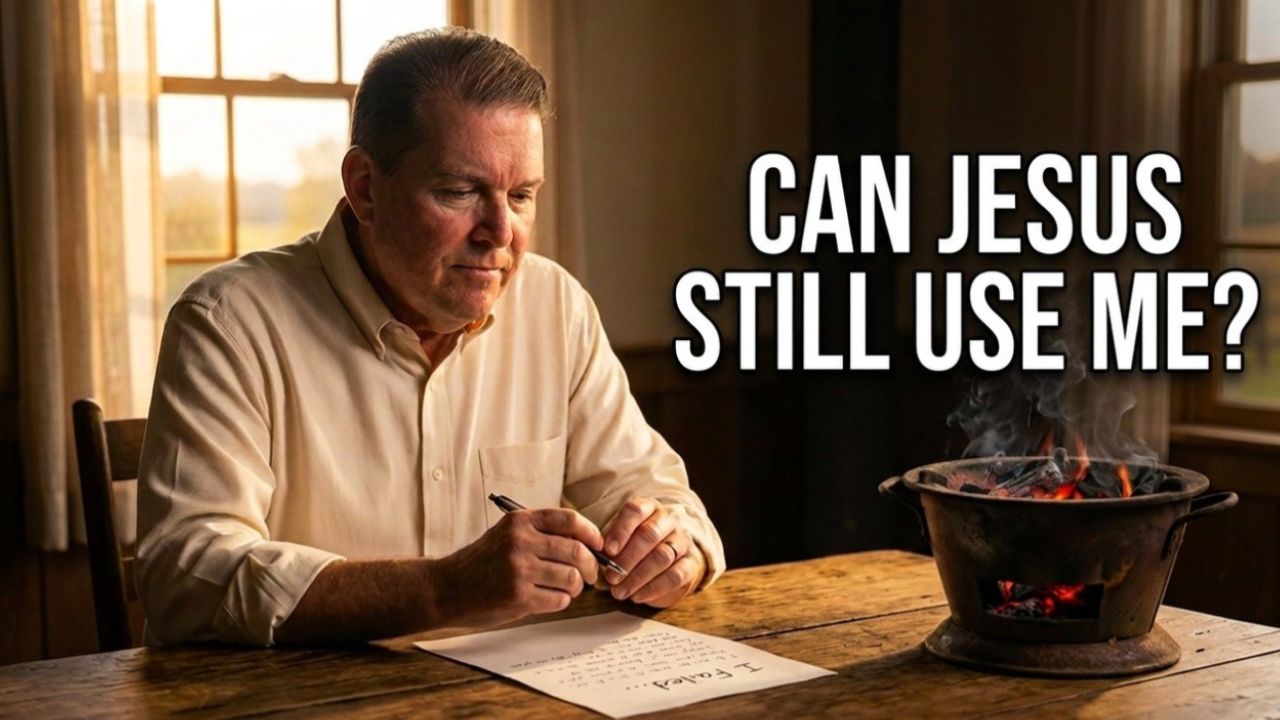
Peter knew that morning. Three days earlier, he'd stood by a fire in a courtyard and sworn three separate times that he'd never met Jesus. Then a rooster crowed, Jesus turned and looked at him, and Peter went out and wept like something inside him had torn.
If our worst failures got to write our endings, Peter's ending is a coward standing by a fire. But that's not how the story goes. A few mornings later, on a beach, Jesus lit another fire and started making breakfast.
The lie that moves in next to your shame
Every one of us has a fire we keep standing next to. A moment we'd give almost anything to take back. Shame doesn't just want you to remember the failure. It wants you to build a house right next to it and live there. It wants your worst moment to become the truest thing about you.
I know that voice better than I'd like to. When I was eight, my parents split up, and somehow the weight of keeping our family afloat financially landed on a third grader. A kid handed that kind of weight learns a lie early: if it falls apart, it's my fault. That voice doesn't leave when you grow up. It just changes clothes.
I've spent more than thirty years sitting across a desk from people as an accountant, and here's what I've learned. The number on the page is rarely what's actually breaking someone. It's the story they've built around the number. I'm a failure. I ruined it. This is who I am now. That's the courtyard, and most of us live there longer than we'd admit.
The one detail in John 21 almost everyone skips past
When the disciples reach the shore in John 21, there's a fire waiting for them. John, who was standing right there, chooses a very specific word for it: a charcoal fire.
That exact word, for that exact kind of fire, shows up only twice in the entire New Testament. Once in the courtyard, where Peter denied Jesus. Once on the beach, where Jesus restores him.
Jesus built the same fire on purpose.
He didn't avoid the scene of Peter's worst moment. He recreated it, then stood in it and refused to leave. That's the opposite of how we usually handle shame. Shame says never speak of this again. Grace says let's walk back to the fire together, because I have something to say to you here.
Then come the three questions: Do you love me? Do you love me? Do you love me? One for each denial. Jesus isn't rubbing Peter's face in his failure. He's un-saying it, letting Peter lay down a new memory on the exact ground where the old one lives. He never once asks how could you. He just makes breakfast.
What "no condemnation" actually means
Romans 8:1 says there is now no condemnation for those who are in Christ. Not reduced condemnation. Not probation. None.
That's not Jesus pretending your failure never happened. It's Jesus taking it to a different fire (the cross) and settling it so completely that by the time he meets you on the beach, there's nothing left to hold against you. The world can offer you a second chance if you earn it back. Only Jesus walks you to the fire, cooks you breakfast, and calls you by name before you've said a single word to fix things.
How your worst failure becomes your ministry
Here's the part that changes your Monday. After each yes, Jesus hands Peter a job. Feed my lambs. Tend my sheep. Feed my sheep. Restoration comes with a commission. He takes the man who failed most publicly and makes him the shepherd.
Why him? Because the shepherd who knows he was carried is gentle with the sheep who stumble.
I can tell you how this works from experience. A few years ago I was carrying nearly two hundred pounds I shouldn't have been, plus a Type 2 diabetes diagnosis that felt like a verdict. Same old voice: this is who you are now. It wasn't the ending. I lost the weight and reversed the diabetes, not because I'm special, but because one day I decided to believe the failure wasn't the final word.
I don't share that to impress anyone. I share it because now, when I sit with someone who feels like their body, their bank account, or their bad decisions have already written their ending, I don't have to guess how they feel. I've stood by that fire myself. The thing I was most ashamed of is the same thing that lets me put an arm around someone else's shoulder and tell them, honestly, it's going to be okay.
Peter learned this too. Years later he wrote that God himself will restore, establish, strengthen, and settle you after a season of suffering. The coward from the courtyard became the shepherd of the church, and he could only write that because it happened to him first, on a beach.
The fire is already lit
So here's the question, aimed at whatever fire you actually think about at two in the morning. Jesus isn't asking if you've fixed it. He's asking the one thing you can answer even while you're still broken: do you love me?
A few things worth sitting with this week:
-
Your worst moment is not automatically the truest thing about you
-
Grace walks toward the failure, it doesn't wait for you to clean it up first
-
Restoration usually comes with a job attached, not just relief
-
The shame you carried can become the thing that makes you gentle with someone else
Stop living in the courtyard. The fire on the beach is already lit, breakfast is ready, and the voice that gets the last word over your life isn't the rooster. It's the One saying, feed my sheep.

Ralph V. Estep, Jr. is a Delaware-based licensed accountant, author, rancher, and media host with more than 30 years of experience in finance, taxation, and small-business leadership. As the founder of Saggio Accounting+PLUS and the creator of the Ask Ralph Media network, Ralph helps entrepreneurs, creators, and everyday families replace money confusion with clarity, confidence, and practical next steps—without shame and without hype.
Ralph’s work blends deep professional expertise with a coach’s mindset and a communicator’s heart. He has held leadership roles across public accounting, financial institutions, law firms, and technology organizations, bringing a rare combination of traditional accounting rigor and modern systems thinking to the people he serves. A graduate of the University of Delaware and Wilmington University (MBA), Ralph is known for turning complex money topics into simple, repeatable frameworks that help people make wiser decisions and build lasting financial stability.
Through Ask Ralph Media, Ralph hosts multiple shows designed to meet people where they are and guide them forward. He is the host of Financially Confident Christian, a daily, faith-based show offering warm, pastoral encouragement for listeners who want peace and practical wisdom with their finances.
He also hosts Truth Unveiled with Ralph, a weekly program that contrasts cultural pressure with biblical truth and invites listeners into deeper spiritual and practical alignment. For small business owners, Ralph leads Grit and Growth Business, spotlighting real sto… Read More
Why You're Exhausted Trying to Obey a God You Love