Are You Resisting Your Inner Peace? The Cost of Disobedience

I'm Ralph Estep Jr., and I want to be direct with you about something I see all the time. You're looking for a breakthrough. Clarity. Peace. But you're not getting it, and you've decided God isn't speaking to you. Here's what I think is actually happening: He already spoke. You heard Him. And you've been resisting it. This isn't comfortable to say, and it's not comfortable to hear. But it's necessary, because so many believers are stuck waiting for the next word when they haven't obeyed the last one. Are You Resisting Your Inner Peace? The Cost of Disobedience
The Problem: You Know, But You Haven't Moved
I work with people who genuinely love God and want to do the right thing. But there's always that one area. The one place where you're just... not moving.
You call it timing. You say you're praying about it. You're processing. But the truth is, God's already been clear, and you're still sitting on it.
Here's the friction point: resistance creates distance. Not from God, but from peace.
Jesus asked this bluntly in Luke 6:46: "Why do you call me Lord, Lord, and do not do what I tell you?"
That's not a rhetorical question. It's a diagnostic one. If you're calling Him Lord, then the evidence of that lordship is obedience. Not perfect obedience. Not obedience when it feels good. But obedience when He's told you what to do.
The cultural message is simple: "Do what feels right. Follow your heart." But God's kingdom doesn't work that way. His kingdom thrives on surrender. And surrender means actual obedience, not just agreement.
Obedience Over Substitutes (Even Good Ones)
Look at Saul in 1 Samuel 15. God told him to destroy everything. Instead, Saul kept the best animals and the king alive. When the prophet Samuel confronted him, Saul tried to spiritualize it. He said he'd saved the animals to sacrifice to God, which sounds noble. It was a substitute for what God actually asked.
Samuel's response cuts through all the good intentions: "Obedience is better than sacrifice."
That's the line you need to remember. You can pray more. Go to church. Give to charity. Volunteer. But if God's asked you to do something specific and you haven't done it, no amount of religious activity fills that gap.
God doesn't need your sacrifice. He needs your yes.
Three Ways Disobedience Hides
Delayed Obedience (Which Is Still Disobedience)
"Not yet, Lord" sounds humble. It sounds like you're being careful. But delay is just a way to stay in control a little longer.
One decision you haven't made. One conversation you haven't had. One change you haven't committed to. And you're waiting for more clarity, more confirmation, more peace. But Hebrews 3:15 is clear: "Today, if you hear His voice, do not harden your hearts."
The hardened heart isn't sudden. It's gradual. You ignore His voice once. Then again. Then you stop noticing it's there.
Partial Obedience (Where You Keep Control)
This one is sneaky. You obey God's direction—but only the parts that don't cost you. Maybe you change your behavior but not your attitude. Maybe you make the sacrifice but resent it. Maybe you do what He asks, but keep back the one thing that actually matters to you.
Partial obedience is really just management. You're treating Jesus like a consultant you can negotiate with instead of a Lord you surrender to. You're keeping control of the pieces you think matter most.
Ask yourself: What areas in your life right now are wrapped in partial obedience? Where are you doing God's work on your terms?
Disobedience's Slow Cost
Disobedience doesn't always blow up immediately. That's why it's dangerous. You think you can get away with it because nothing catastrophic happens—not yet.
But there's a cost that's harder to measure. Jonah's story shows this. His disobedience didn't just affect him. It affected the sailors, it created chaos, it put others in danger. When you resist God's direction, you're not just complicating your own life.
And spiritually, you slowly become numb. You stop feeling the friction between your choices and your faith. You rationalize. You adjust your standard. You convince yourself it's fine.
The Culture Wants You to Resist
Our culture doesn't celebrate surrender. It celebrates self-made people, self-determination, and following your passion. Every algorithm, every podcast, every mentor is telling you one thing: Do what you want.
But Scripture doesn't whisper here. It's loud: "Trust in the Lord with all your heart, and lean not on your own understanding" (Proverbs 3:5). And later, in Romans 12:2, "Do not conform to the pattern of this world, but be transformed by the renewing of your mind. Then you will be able to test and approve what God's will is—his good, pleasing and perfect will."
God's not calling you to be successful by the world's standard. He's calling you to be faithful. And faithfulness means obedience, especially when it costs something.
You Can Come Back
Here's the part that matters: God's conviction isn't punishment. It's an invitation.
When Peter denied Jesus, his failure didn't disqualify him. He came back. He chose to realign. And Jesus restored him. Later, Peter became a foundational figure in the early church.
You don't have to stay where you are. You don't have to keep resisting. That sense of friction you're feeling between where you are and where God's calling you to be—that's not His judgment. That's His love pulling you toward freedom.
Three Things to Do Right Now
1. Name It Honestly
What is it? Not the spiritual-sounding version. The real one. Is it pride keeping you stuck? Fear? Comfort? A relationship you know isn't what God wants for you? A decision you're postponing? A direction He's been clear about and you keep ignoring?
Write it down. Be specific. Not "I need to work on my faith." But "God's asked me to have a hard conversation with [person], and I've been avoiding it for six months."
2. Stop Renaming
Don't spiritualize rebellion. Calling it "still praying" when you've been avoiding it for months is renaming. Calling it "waiting for God's timing" when you know what He's asked is renaming.
Call it what it is. And then decide: Are you going to obey?
3. Obey the Next Thing
You don't have to fix everything at once. Pick the one thing—the clearest directive God's given you. And do it this week. Not next month. This week.
One step. One yes. And watch what happens to the peace you've been chasing.
For Those Who Haven't Started Yet
Maybe you've never actually surrendered your life to Jesus. You've been religious about faith, but you haven't said yes to Him. That's not too late.
He offers new life. Not perfection, not immunity from hard things. But restoration. Purpose. Freedom.
If you're ready, pray something simple: "Jesus, I'm done doing this on my own. I surrender my life to you. Help me follow you, even when it costs something."
Then find a Bible-believing church. Start reading Scripture. Get connected to a community that's serious about following Jesus.
God's not waiting for you to get your act together first. He's waiting for you to say yes.
The Way Forward Is Through Obedience
You can't skip this part. You can't pray your way around it or read enough books about it. The peace you're looking for doesn't come from breakthrough moments or sudden clarity.
It comes from doing what God's asked you to do.
Step into what He's told you. Align your life with His direction. And watch the friction disappear.
That's the path to the peace you've been chasing.
God bless you.
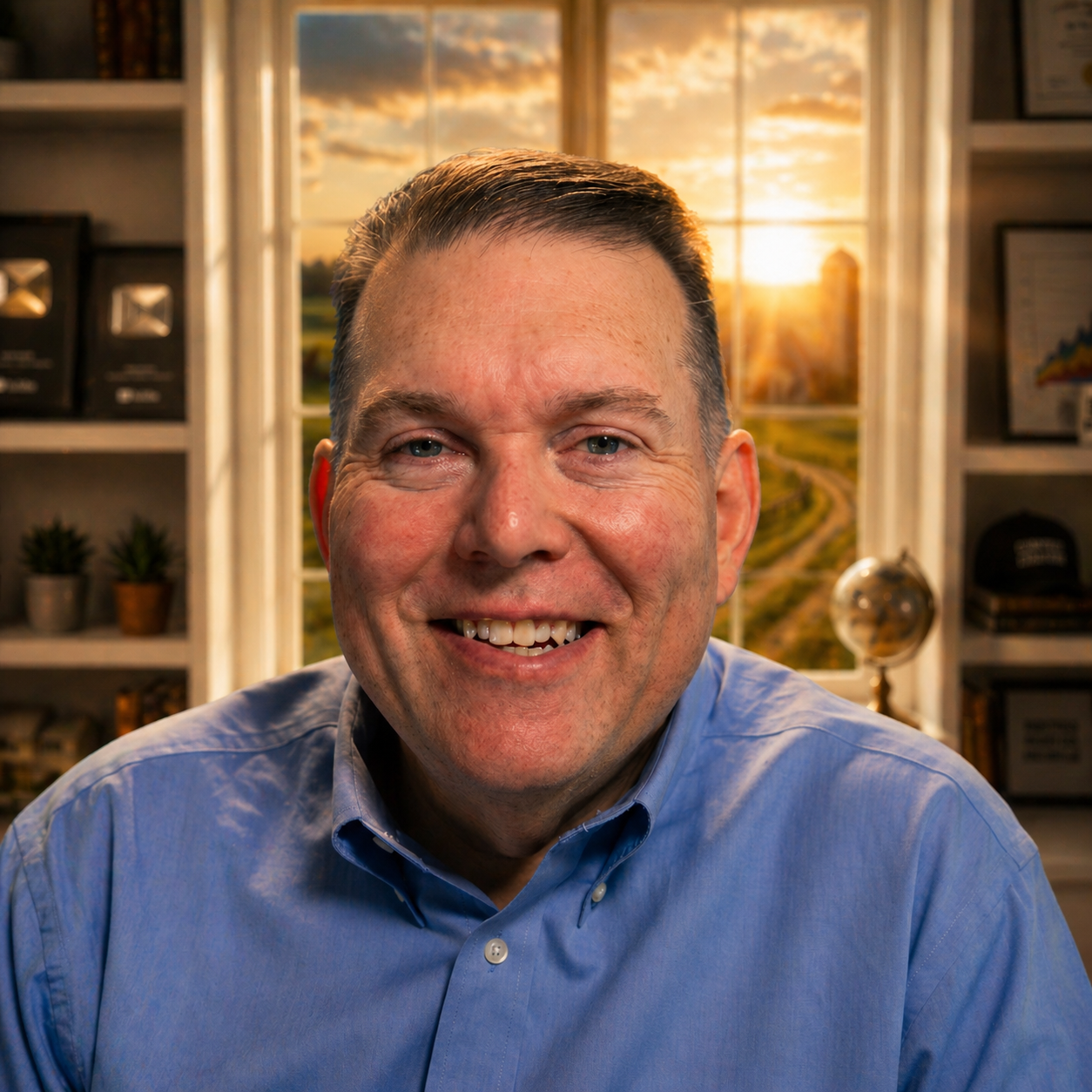
Ralph V. Estep, Jr. is a Delaware-based licensed accountant, author, rancher, and media host with more than 30 years of experience in finance, taxation, and small-business leadership. As the founder of Saggio Accounting+PLUS and the creator of the Ask Ralph Media network, Ralph helps entrepreneurs, creators, and everyday families replace money confusion with clarity, confidence, and practical next steps—without shame and without hype.
Ralph’s work blends deep professional expertise with a coach’s mindset and a communicator’s heart. He has held leadership roles across public accounting, financial institutions, law firms, and technology organizations, bringing a rare combination of traditional accounting rigor and modern systems thinking to the people he serves. A graduate of the University of Delaware and Wilmington University (MBA), Ralph is known for turning complex money topics into simple, repeatable frameworks that help people make wiser decisions and build lasting financial stability.
Through Ask Ralph Media, Ralph hosts multiple shows designed to meet people where they are and guide them forward. He is the host of Financially Confident Christian, a daily, faith-based show offering warm, pastoral encouragement for listeners who want peace and practical wisdom with their finances.
He also hosts Truth Unveiled with Ralph, a weekly program that contrasts cultural pressure with biblical truth and invites listeners into deeper spiritual and practical alignment. For small business owners, Ralph leads Grit and Growth Business, spotlighting real sto… Read More
The Resurrection of Jesus: What Happens When You Actually Trace the Evidence